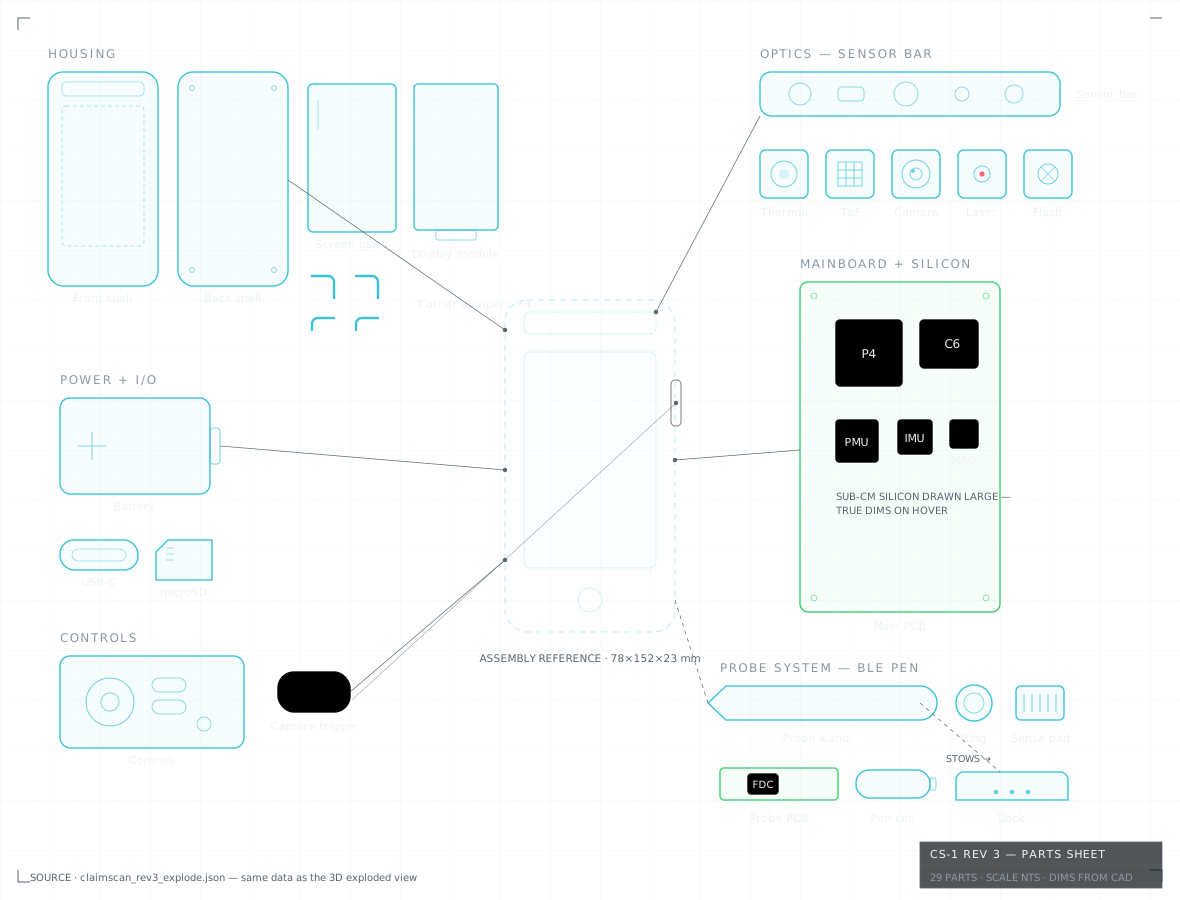
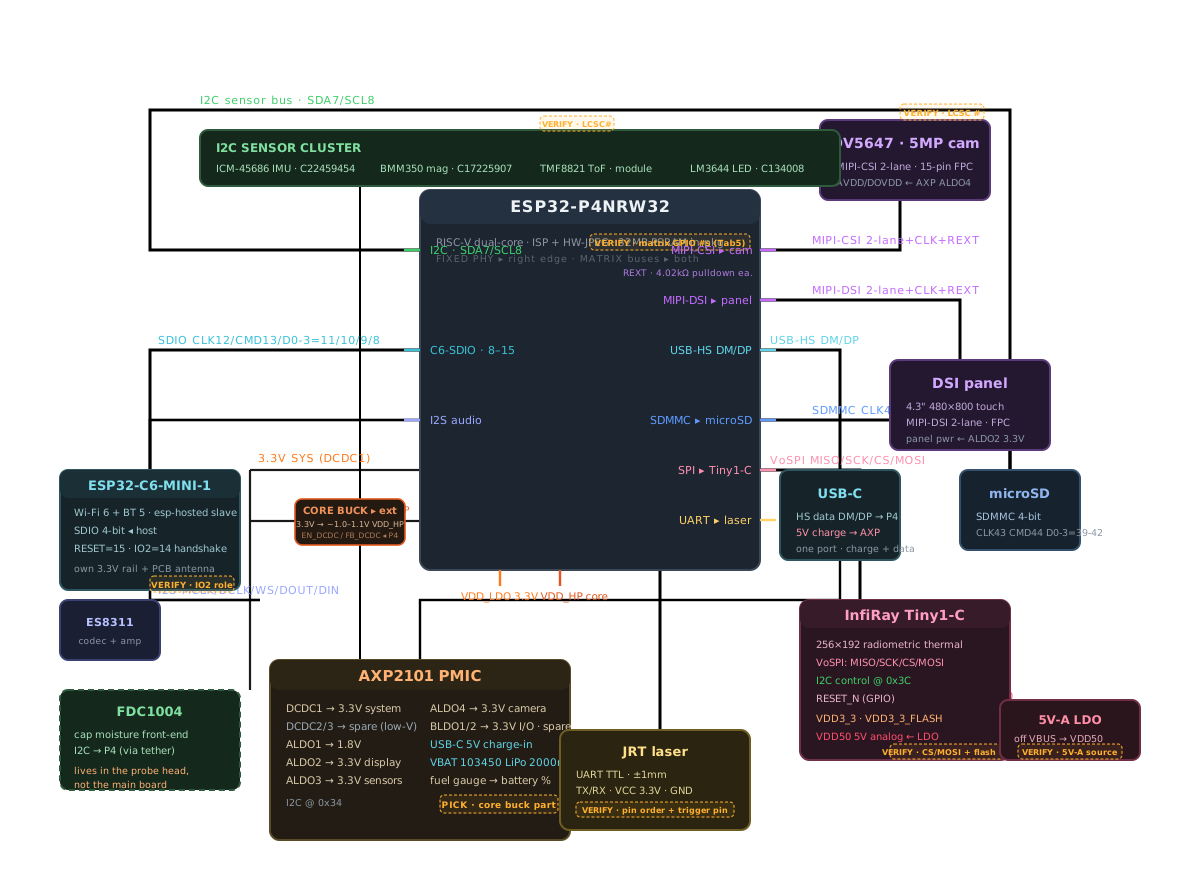
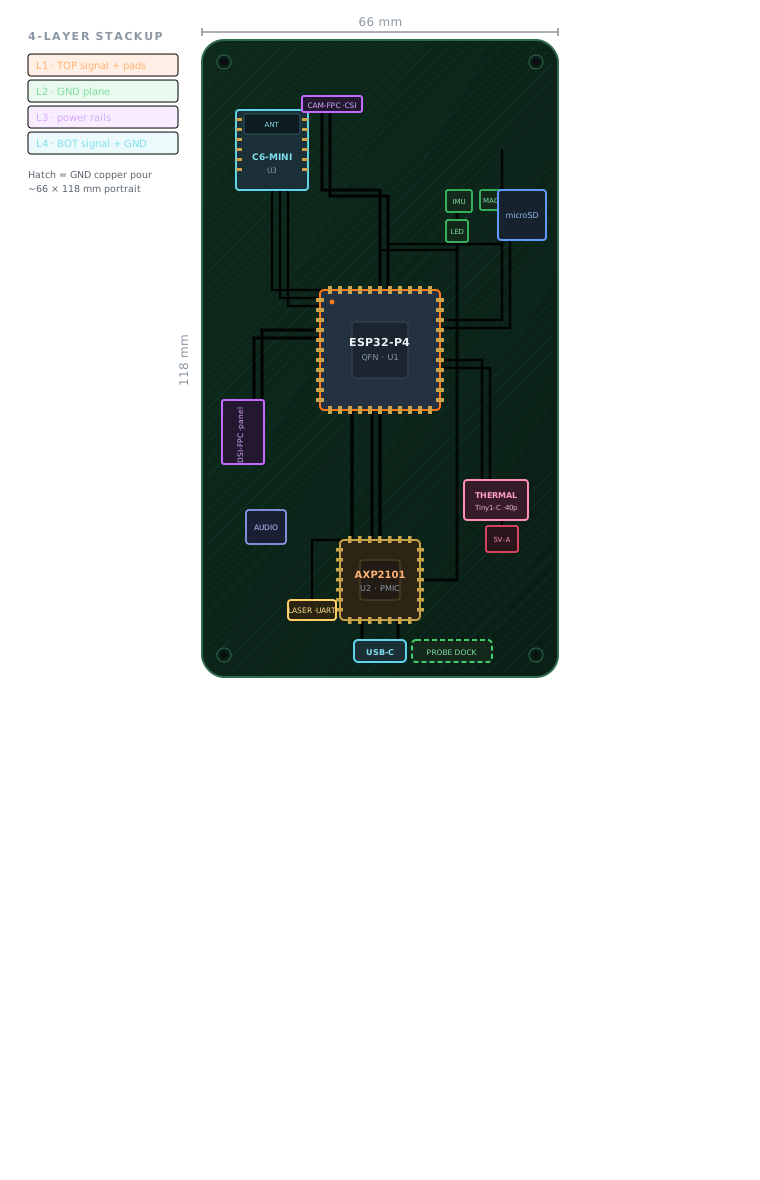
A purpose-built handheld for adjusters and mitigation crews — camera, moisture, measurement and sketch in one instrument that assembles the package the desk adjuster actually reads.
The viewfinder is always on. The device reads context from hardware state and files every capture the right way — it never asks you to pick a mode.
Live reading, material and wet/dry band land in the overlay — and burn into the JPEG. The value is in the photo, where it can't get separated from its evidence.
CLM-1407 · KITCHEN · 09:42 · DRYWALL — WET vs dry refThe moment the laser locks a distance, the capture becomes a dimension photo. Measurement in the frame, no second trip with a tape.
CLM-1407 · KITCHEN · 09:43 · 3.42 mA clean capture — still stamped with claim, room and timestamp, still filed into the package in reading order.
CLM-1407 · KITCHEN · 09:44The same capacitive physics the professional meters use, driven into the wall — shielded so it reads the material, not the hand gripping it. Dual-depth pad: a shallow surface read and a deep read in one touch. No holes in the customer's drywall.
Green, amber, red — at the point of contact. Feedback where your eyes are: on the wall. You sweep the surface and watch the ring, not a screen at your hip.
Readings are comparative wet/dry against a dry reference of the same material, captured at the start of each room. No fake percentages — an uncalibrated absolute number on an audit document is worse than none.
Probe in one hand, camera in the other — the viewfinder never leaves the damage. One USB-C port double-duties as charging when the probe's unplugged, and the probe handshake means a wall charger can never energize it.
Claims die on missing justification — absent pre-demo photos, unjustified equipment days, evidence nobody can find. CS-1 makes those gaps structurally impossible to ship.
Every affected room demands before-photos of each material being removed — prompted, not optional. The number-one reason mitigation packages kick back, closed off at capture time.
Place equipment with a date, take daily readings at the same locations — the chronological dry log builds itself, per room. No manual log entry, no reconstructed-from-memory tables.
Photos, readings and equipment are linked in the data model — no orphan equipment days, no undocumented removals, no reading that can't point to its photo.
Before anything leaves the site, the package is checked: missing pre-demo photos, dry-log coverage gaps, readings without linked photos, rooms without dimensions, missing risk and elevation shots. Every flag deep-links to the fix.
Laser distance plus heading — the device does the geometry. Rooms drag-and-snap together on the plan, doors and windows mark in. A legible floor plan in the report, not CAD homework back at the truck.
Hands full on a ladder, gloves soaked — say "capture," call out room names, narrate the damage as a voice memo. On-device recognition, no cloud, no signal required.
The ClaimScan companion app is running now — ordered capture, burned-in readings, auto dry logs, sketch, validator and on-site export. Device and app speak one data contract: a claim started on either finishes on either.